
Environmentally Friendly Options for Plastic Glasses
(Please find a newer version of this page here).
What do you do with disposable plastic glasses when you have finished with them? Throw them away. But what is the best way to recycle them, and is plastic the only choice? What about paper cups? What about plastic glasses made from biodegradable plastic?
Recycling Plastic Glasses
Regular disposable plastic glasses are the cheapest to buy and they are easily recycled.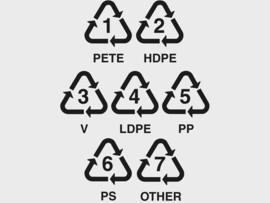
The key to successful recycling is economics. Manufacturers of plastic items will not use recycled plastic if it more expensive than the virgin plastic from which it is derived. Collecting, storing and reprocessing plastic costs money so it is a difficult thing to make work if the virgin material is cheap to begin with. To make their product economically viable, plastic recyclers want a source of nice clean post-consumer plastic of a single type that they can reprocess into high quality recycled plastic that manufacturers will want to buy. Plastic glasses fit the bill perfectly because:
1. They are uncoloured: coloured plastic is unwanted because although colour can be added, it cannot be removed.
2. They are clean: Unlike many other plastics (e.g. food packaging), plastic glasses are relatively uncontaminated.
3. They are a single material: Disposable plastic glasses are lumps of pure, food-grade plastic of a single type (usually either type 1, 5, or 6).
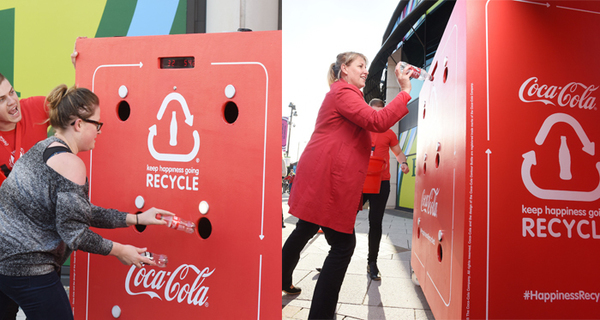
If the economics for reprocessing plastic glasses are sound, the challenge is to collect the cups in the first place. This can only be done at the event itself. Several years ago, this was not so easy. However, these days, with cup collecting bins now freely available, it is a simple thing to organise. On a small scale, there are many off-the-shelf choices for on-site cup collection that can be branded with event signage. On a larger scale, cup recycling can be a communication opportunity in itself. Please see this fine example from Coca Cola:
The Plastic Used to Make Plastic Glasses
In the modern era of mixed recycling, the type of plastic matters less than it used to. However, mixed recycling can lead to an approach where everything that looks like plastic goes in the same bin. The problem with this is that there are some types of plastic that cannot be recycled, and indeed contaminate recycling streams causing whole batches and the recycling efforts of thousands of people to be condemned to landfill.
Here is an overview of the types of plastic used to make plastic glasses. Each material has strengths and weaknesses with regard to its quality and environmentally friendly credentials.
Type 1 (PET & rPET): PET is a clear, flexible plastic used to make fizzy drinks bottles, fruit punnets, and smoothie cups. It will not crack or shatter, but it is not very strong. This makes it unsuitable for stemmed glasses and reusable glasses. As a raw material, it is relatively expensive compared with the other types of plastic on this list and consequently plastic glasses made from it are more expensive. However, because of its higher value as a raw material, PET is a more sought plastic for recycling. rPET is PET that includes a proportion of material that has already been recycled.
Please find PET plastic glasses available from Regalzone here.
Type 5 (polypropylene): Polypropylene is a very common type of plastic. Plastic glasses made from polypropylene are the least expensive of all. Plastic glasses made from polypropylene are translucent, flexible, shatter and crack resistant. Its traditional disadvantage is that plastic glasses made from polypropylene lack of clarity. However this issue has largely been overcome and modern polypropylene is almost as clear as PET. Polypropylene plastic glasses are an excellent clean source of plastic and would be readily accepted for recycling.
Please find polypropylene plastic glasses available from Regalzone here.
Type 6 (polystyrene): Polystyrene is another common plastic. When made from thermoformed sheets, polystyrene tumblers are inexpensive and shatterproof. When injection moulded, they have has excellent clarity and are rigid enough to be made into more sophisticated shapes than is possible with PET and polypropylene. The disadvantage of this rigidity is that they are not shatterproof. Polystyrene plastic glasses are an excellent clean source of plastic and would be readily accepted for recycling.
Please find polystyrene plastic glasses available from Regalzone here.
Type 7 (other): As the name implies, this category includes every other type of plastic that is not 1-6. As a result, the plastic is usually unidentifiable and not suitable for recycling. On a plastic glass, seeing ‘Type 7’ indicates that it is made from one of the following materials:
Polycarbonate, Acrylic, SAN: Plastic glasses made from these materials will not be easy to recycle but will be fully reusable – just like real glass. If the maxim to follow is Reduce-Reuse-Recycle then anything that can be reused is a naturally environmentally friendly choice. Please find reusable plastic glasses available from Regalzone here.
PLA: PLA is marketed as ‘biodegradable plastic’. It is used for disposable glasses. There are various synonyms for it, including Bioplastic and corn starch. Just a few years ago, before the recycling of more common types of plastic was more widespread, PLA was the great new hope for an ecologically sound future in plastic glassware. Regalzone and many other manufacturers introduced a range of PLA glasses, and indeed we can still obtain them if your customers demand it. However, a number of severe disadvantages quickly became apparent: The term biodegradable was a misnomer: Yes, PLA does biodegrade, but only under the high temperature and humidity found in a commercial compost facility (if you could find one to accept it). PLA will not degrade as litter and PLA will not degrade on a domestic compost heap. This makes PLA about as biodegradable as an old boot, and they are still digging up old boots thrown away by the Romans. Perhaps the most environmentally damaging aspect of PLA is that it is most commonly disposed of into the regular plastic waste streams, where it contaminates the regular plastic waste stream and renders it suitable only for land fill. And finally, in an age when the world’s demand for food will grow beyond the land’s capacity to supply it, the plant material used to make PLA takes up valuable resources.
Paper: Paper cups cannot easily be recycled because they are a mixed material: fibreboard lined with plastic. However that does not mean to say that it is impossible to recycle them.
http://www.simplycups.co.uk - Simply Cups is currently the UK’s ONLY paper cup collection and recycling service.
New choices
A new choice has recently become available that offers excellent branding opportunities combined with reusability and recyclability. These cups are made from injection moulded polypropylene with an in-mould label. As fully reusable plastic cups, these glasses are many times more expensive than disposable cups. However, if they are offered to users at events for a small deposit, their cost can be fully or partly covered. The user then takes the cup for refills. At the end of the event, the user returns the cup to the bar for a refund or takes it home as a souvenir of the event. When the cup reaches the end of its life, it can be recycled with other polypropylene.
Summary
For as long as there are public events with drinks being served, there will always be a need to employ some sort of cup or glass.
‘Biodegradable’ plastic cups have proved to be a harmful mirage.
Paper cups, as a mixed material are difficult to recycle.
Disposable plastic cups are sought after by recyclers, but the key to making them environmentally friendly is collection.
It can be argued that a reusable cup or glass is the most environmentally friendly choice of all. However, reusable plastic glasses cost a lot more than disposable plastic glasses and even these are not without their environmental issues (detergent, energy to heat water, transport, storage, breakages).
Reusable cups with full wrap IML branding sold as souvenirs that can ultimately be recycled are offering new ways of doing things and provide another choice that could be a major player in the 2020s.
Regalzone can and will continue to provide every option for cups and glasses for events. If you have any comments or questions about this article we would be delighted to hear from you.
Further reading:
The Guardian: Biodegradable plastic 'false solution' to Ocean Waste Problem (May2016)
Tree Hugger: The Big Awful Truth about Biodegradable Plastics (May 2016)
Metro: How coffee chains are tricking customers into thinking paper cups can be recycled (March 2016)
The Guardian: 'Sustainable' bio-plastic can damage the environment (April 2008)
The New York Times: The Myth of Biodegradability (February 2012)
Quest: Biodegradable Plastics (June 2014)
Materials World: Biodegradable Plastics - a viable solution or a long term problem (June 2014)
Consumer Advertising Law Blog: Seller beware - Plastic is not biodegradable (November 2011)
Huffington Post: Bioplastics and the Truth About Biodegradable Plastic (January 2016)
The Guardian: Campaigners Hail 'recycling revolution' as Plastics Collection Soar (Dec 2010).
WRAP: Information resource for plastics recycling, including Mixed Plastics.
Recoup: RECycling Of Used Plastics Ltd, a leading authority on plastics waste management and recycling.
Save-a-Cup: a not for profit dedicated plastic and polystyrene recycler.
| Advantages | Disadvantages |
Environmental Friendliness |
|
|---|---|---|---|
| PET (type 1) | Clear, un-crackable, easy to recycle. | Relatively expensive, no stemmed glasses available | High |
| Polypropylene (type 5) | Relatively inexpensive, un-crackable. | Opaque, no stemware available | Medium |
| Polystyrene (type 6) | Clear, relatively inexpensive | Will crack under pressure | Low |
| PLA (type 7) | Good PR | Expensive, very difficult to recycle, likely to contaminate plastics waste streams | Low |
| Mixed (paper) (type 7) | Only option for hot drinks | Not ideal for serving clear liquids | Low |
Regalzone would welcome any feedback readers may have on this article. Please address your comments to us using the Contacts Form.